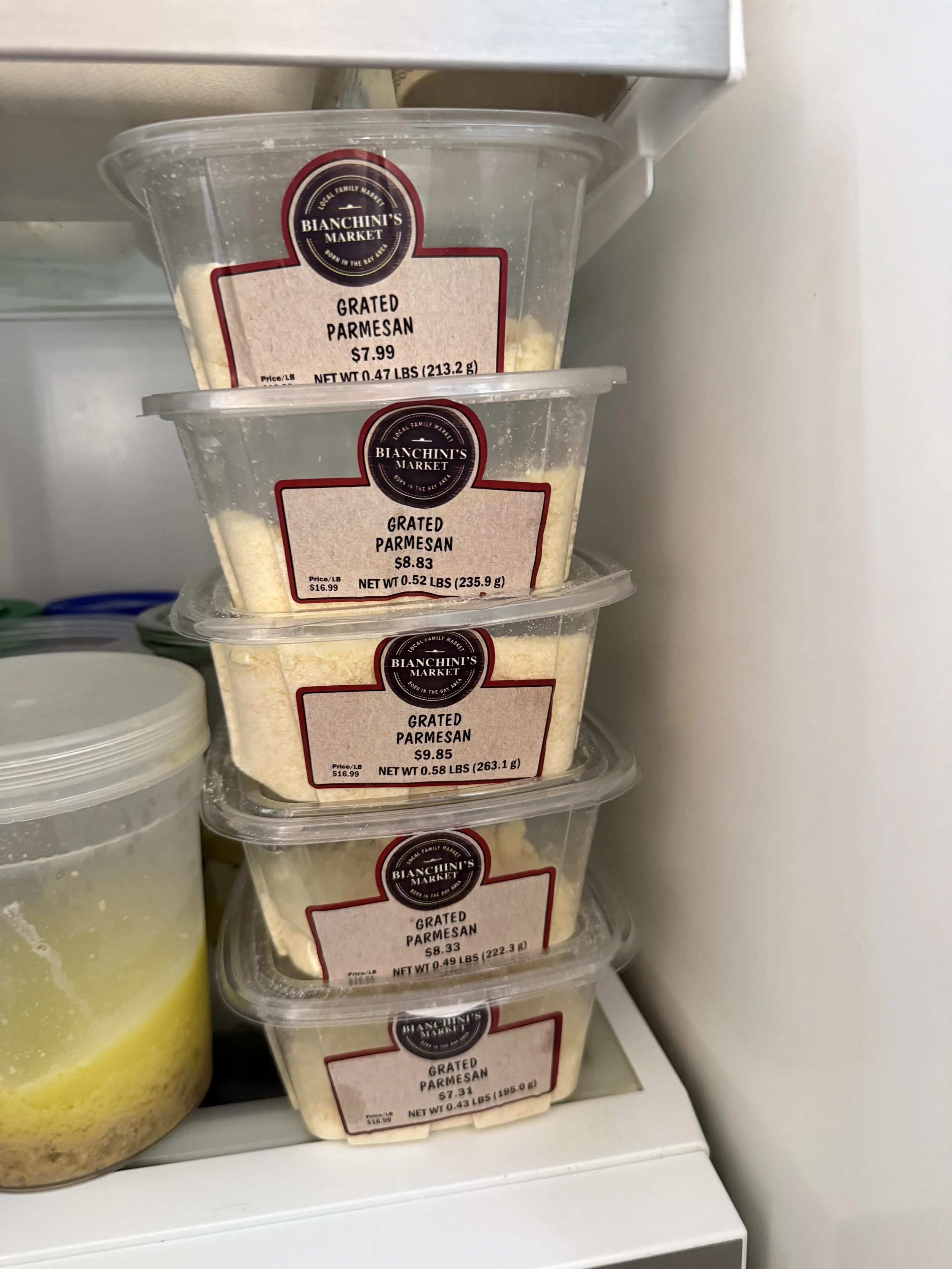
Five Containers of Parmesan: Why You Keep Buying What You Already Have
My housecleaners cleaned out my refrigerator this week and found five containers of parmesan cheese.
Five.
Not five different brands I was taste testing. Not a bulk buy for a party. Five separate trips where, apparently, some part of my brain looked at the fridge and concluded: we are out of parmesan. We must fix this.
If you've ever opened a cabinet and found three bottles of the same spice, or bought scissors only to get home and realize you now own five pairs, you already know this story. It's not really about cheese.
It's Not a Willpower Problem
Here's the thing I want to name clearly, because I think it gets missed: this isn't about being careless or lazy. It's about how working memory works, or doesn't, when you have ADHD.
Working memory is the mental workspace that holds information temporarily so you can use it. It's what lets you keep a phone number in your head just long enough to dial it, or remember what's in the fridge while you're standing in the cheese aisle. For a lot of ADHD brains, that workspace is smaller and less reliable than the demands placed on it.
Here's a reframe I find helpful: buying something you already own isn't really a memory failure. It's an access failure. The knowledge exists somewhere in long-term storage. It's just not loaded into consciousness at the exact moment you need it, which happens to be while you're standing in a grocery aisle holding a shopping list you may or may not still be looking at.
In a strange way, it's the flip side of ADHD clutter. A lot of us leave things out on the counter because if we put them away, we'll forget they exist. Buying duplicates is what happens when something did get put away, and present-you has no idea past-you already solved this problem.
You're in Good Company
The stories pile up fast once you start looking. People who pay for groceries, walk out of the store, and leave the bag sitting at the register. People who buy a six-pack of storage bins to get organized, only to realize afterward they already owned four of them, and now have less space than when they started. People who walk past the same pile of clutter for days without seeing it, because for an ADHD brain, "out of sight, out of mind" can apply to things sitting in plain view.
None of this means something is wrong with you. It means the system you're using (mental tracking, in the moment) is being asked to do a job it was never built to do reliably.
What Actually Helps
The fix isn't "try to remember better." It's redesigning things so you don't have to.
Take a photo of the fridge and pantry before you shop. Fast, no app required, and it turns "do I have parmesan?" from a memory question into a photo you can just look at.
Keep a running list on the fridge door itself, so items get added the moment you notice you're low, not later when you're trying to recall it from memory.
Use clear bins or a turntable so nothing hides behind something else. If you can't see it, your brain will assume it doesn't exist.
Check before you buy, not after you unpack. A quick glance at your fridge photo or list before anything goes in the cart saves the cleanup later.
Give every category a specific home. When cheese always lives in the same spot, a duplicate becomes visually obvious instead of blending in.
Your Turn
What's your version of the parmesan? I'd genuinely love to hear it. Drop it in the comments, because if there's one thing I've learned doing this work, it's that naming the pattern out loud is usually the first step to working with it instead of against it.
And if you're ready to build systems that fit the way your brain actually works, that's exactly what we do together in coaching.

You may also like…